A good valley walk is mostly good planning and a decent lunch.
Valley trails forgive a lot. The grade is kind, the water is close and the scenery does half the work. What they do not forgive is a late start, a soggy sandwich or a bottle emptied by noon. This guide covers the unglamorous part: picking the trail, shaping the day, carrying the right things and eating well on the way.
Choosing a valley trail you will actually finish
Start with the numbers that predict how a day feels. Length matters, but climb and surface matter more. A flat 10 kilometres on packed gravel is easier than 6 kilometres of loose rock with a steady grade. For a first outing, look for a total climb under 200 metres and a distance between 5 and 8 kilometres. That is roughly two to three hours at a conversational pace, plus a proper lunch stop.
Valley floors have their own quirks. Trails that follow a creek are cool and shaded, which is lovely in July and miserable in a damp October. Trails along the open flats are the reverse: sunny, exposed and sometimes windy. Read a trail description for the aspect, meaning which way the walk faces, and match it to the season.
Loop, out and back, or point to point
A loop feels like a journey and needs no retracing, but it commits you: once you are halfway round, turning back costs as much as going on. An out and back lets you quit at any bend, and the return view is often better than the outward one. Point to point routes need a shuttle or a bus, which is worth it only if the schedule is easy to check.
Read the trail, not the photo
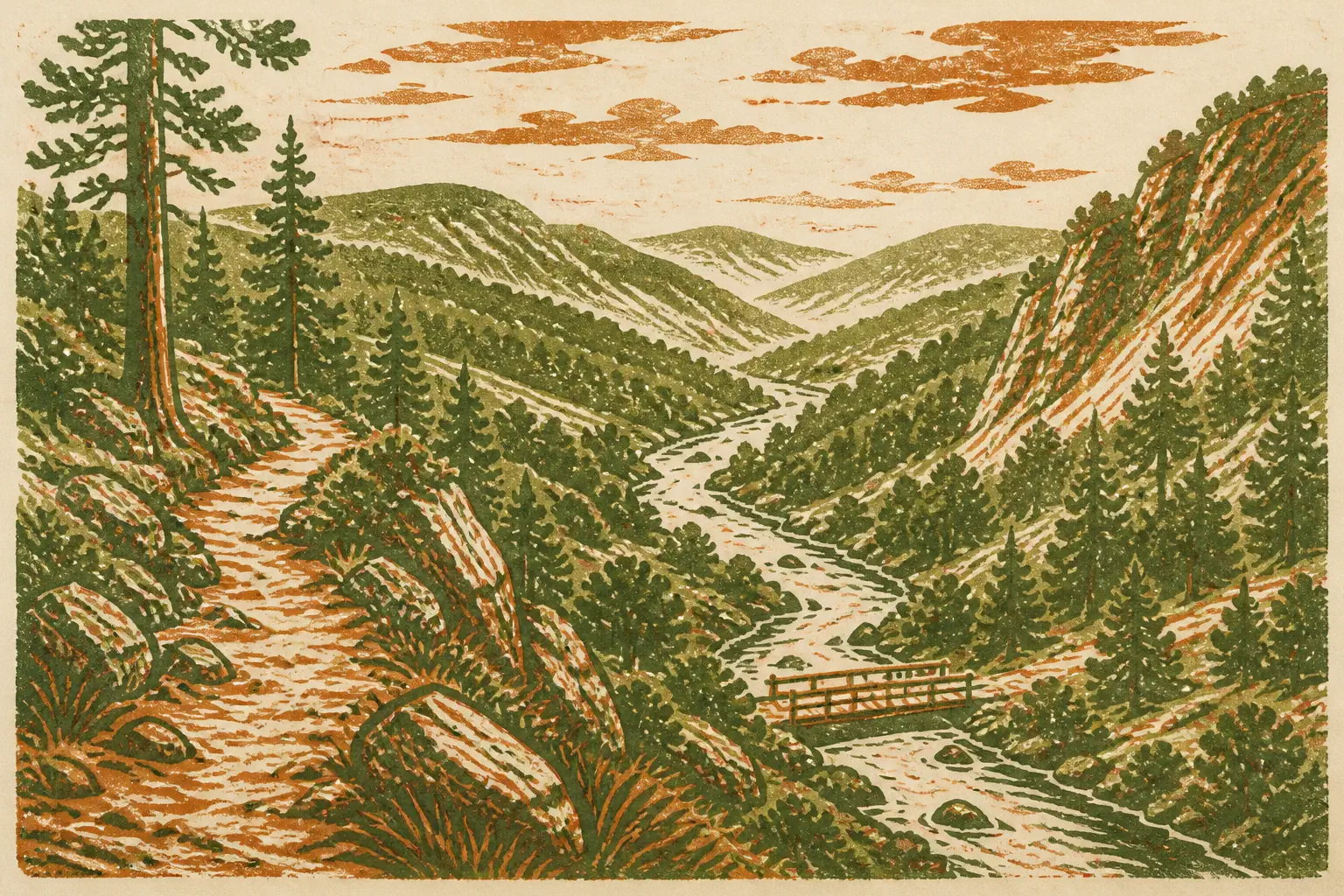
Check three things before you commit: the surface (packed, rooty, rocky or muddy), the crossings (bridge, stepping stones or a wade) and the last reliable water point. A single wet crossing can change a dry-feet plan completely.
Planning a day loop without a spreadsheet
Work backwards from the time you want to be at the car. Say you want to be back by four. A three-hour walk plus an hour for lunch and photographs means a ten o'clock start at the latest, and nine thirty if you are slow to get going, which most of us are. Valley light fades earlier than on a ridge, because the slopes shade the floor well before sunset, so build in slack.
Set two turnaround rules before you leave. The first is a time: if you have not reached the halfway point by a set hour, you turn around. The second is a condition: new rain, a swollen creek or a trail that is harder than described means you reconsider. Deciding in the car park is easy. Deciding at the far end of the trail, tired and a little proud, is not.
Tell someone your route and your expected return. A text with the trailhead name and the time you will be back is plenty. If cell coverage is patchy, which it often is in a deep valley, download the map beforehand and carry a paper copy as a backup.
A simple pace guide
Most walkers cover about 4 kilometres an hour on flat ground. Add roughly 10 minutes for every 100 metres of climb. Add more with children, a heavy pack or a camera.
What to carry, and what to leave at home
A day pack of 15 to 20 litres holds everything a valley loop needs. The short list is short for a reason: the more you carry, the less you enjoy the walk.
- Water, and a way to treat more if the route follows a creek
- Food for the walk plus a little extra
- A light rain shell, even on a bright morning
- A warm layer, since valleys cool quickly in the evening
- A basic first aid kit with blister care
- A map, a charged phone and a small headlamp
- Sun protection and an insect repellent that suits the season
- A bag for all your waste
Footwear is the one place not to economize. Broken-in trail shoes with a grippy sole are enough for most valley paths. Wear wool or synthetic socks and carry a spare pair, because wet feet end more hikes than any hill does.
Water, in numbers
In mild weather, plan on about half a litre for every hour you walk. Add a third in heat, and more again if the route is exposed. Start the day hydrated and sip steadily instead of gulping at rest stops.
| Walk length | Mild day | Hot day |
|---|---|---|
| 2 hours | 1 L | 1.5 L |
| 3 hours | 1.5 L | 2 L |
| 4 hours | 2 L | 3 L |
Creek water can look clean and still carry parasites. Filter it, treat it or boil it before drinking, and carry enough that you never have to rely on it.
Trail lunches that survive a backpack
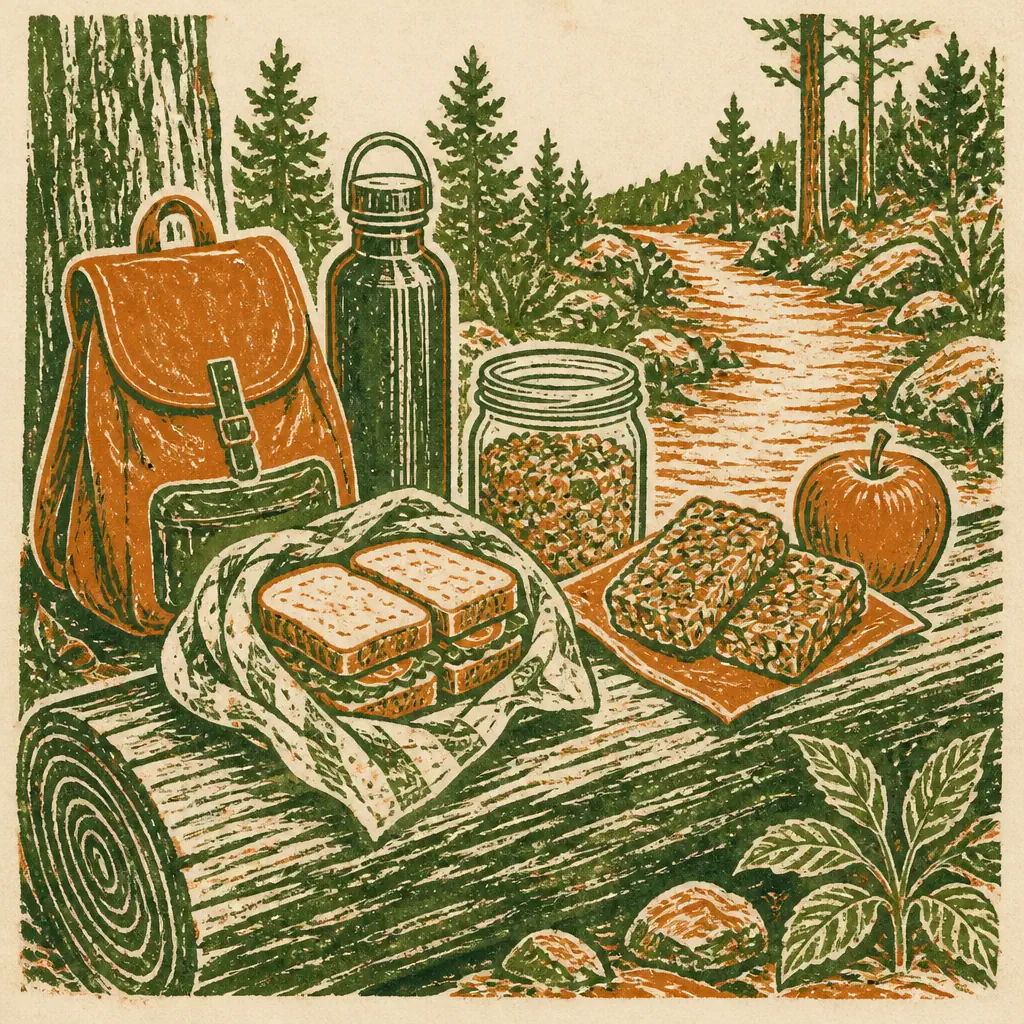
The best trail food is food that tastes as good at room temperature after four hours as it did in the kitchen. That rules out most mayonnaise, soft herbs and anything that needs to stay cold. It favours oil, vinegar, nut butters, hard cheese, dense bread and fruit with a firm skin.
The sturdy sandwich
Use a dense loaf, such as sourdough, rye or a seeded whole wheat. Spread both slices with butter, nut butter or hummus to make a moisture barrier, then add sliced hard cheese, roasted peppers and a few leaves of arugula. Wrap it tightly in beeswax cloth or parchment, and keep it flat at the top of the pack, away from the water bottle.
A grain salad that improves in the jar
Cook a cup of farro, barley or quinoa and let it cool. Toss with a spoonful of olive oil, a good splash of lemon juice or cider vinegar, salt, chopped cucumber, a handful of chickpeas and some toasted seeds. Pack it in a wide-mouth jar. The grain absorbs the dressing and the flavours settle, so it is better at noon than at breakfast.
No-bake oat bars
Warm half a cup of honey with three-quarters of a cup of peanut or sunflower butter until loose. Stir in three cups of rolled oats, half a cup of chopped dates and a handful of seeds. Press firmly into a lined pan, chill for an hour, then cut into twelve. Wrap each bar separately so you can hand one out without opening the whole stack.
Keep it safe to eat
Food left in a warm pack for more than two hours in hot weather is a risk. Skip raw egg, soft cheeses and cooked meats unless they sit beside an ice pack. When in doubt, eat the perishable item first and keep the dry snacks for later.
Valleys change with the calendar
Spring brings snowmelt, high creeks and mud, so crossings that are easy in August can be serious in May. Summer offers long days and shade along the water, but also biting insects and afternoon storms. Autumn is often the best season: stable weather, cool air and colour on the slopes. The days are short, though, so start earlier. Winter turns a gentle trail icy and demands traction devices and extra layers.
Whatever the season, check the forecast for the valley itself and not for the nearest town, because temperature and wind can differ a good deal between the two.
Boring habits that prevent bad days
Most trail problems are small ones that grow: a hot spot on the heel, a missed snack, a skipped layer. Deal with them early. Put a blister dressing on at the first warm patch, not the first open sore. Eat before you are hungry and drink before you are thirsty.
Know where the exits are. On a valley loop there is usually a road or a side trail that shortens the route, and knowing it exists makes it easier to use. Watch for wildlife, too. Make noise on blind corners, keep food stored when you stop, and give any animal plenty of room.
If the weather turns, get out of the open, away from tall isolated trees and off the exposed flats. If a creek is rising, do not cross. Waiting an hour is nearly always cheaper than the alternative.
Seven habits for sharing the trail
Leave No Trace is a set of seven principles, and a valley day touches nearly all of them. Plan ahead and prepare, which is most of this guide. Travel and camp on durable surfaces: stay on the path, even where it is muddy, because walking around a puddle widens the trail. Dispose of waste properly: carry out everything, including peels, cores and crusts, since these break down slowly and attract animals. Leave what you find: stones, flowers and antlers belong where they are. Minimize campfire impacts: use a stove, and only where fires are allowed. Respect wildlife by watching from a distance and never feeding it. Be considerate of other visitors: yield to uphill walkers, keep voices low and keep dogs under control.
Short answers to common questions
How far is a good first valley hike?
Between 5 and 8 kilometres on a gentle grade is a comfortable start. Most people finish it in two to three hours, including a lunch stop.
How much water should I carry?
About half a litre per hour of walking in mild weather, more in heat, plus a margin for the unexpected. Treat any creek water before drinking it.
What food keeps best without a cooler?
Grain salads dressed with oil and vinegar, hard cheese, nut butter sandwiches, dried fruit and oat bars all hold up for several hours in a pack.
Do I need to pack out fruit peels and crusts?
Yes. Leave No Trace asks you to carry out all food waste, because even natural scraps linger and draw animals to the trail.